- Get link
- X
- Other Apps
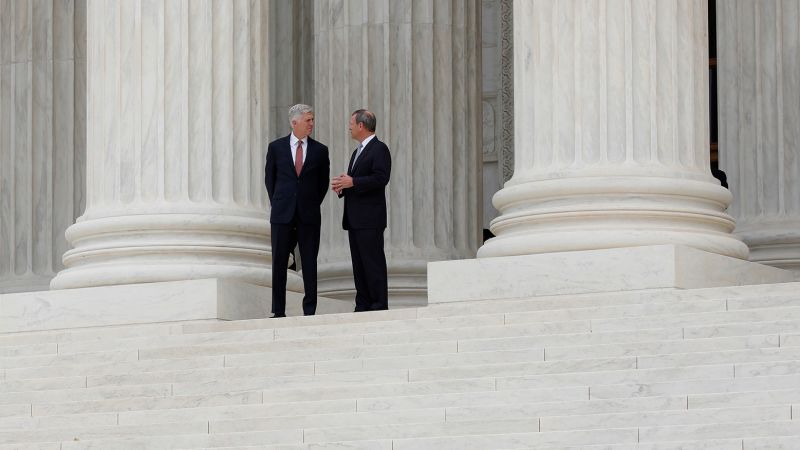
Article Heading: Why Roberts and Gorsuch May Decide the Supreme Court’s Blockbuster Transgender Sports Case
The Supreme Court's recent decision to review transgender sports bans has placed Chief Justice John Roberts and Justice Neil Gorsuch under intense scrutiny. Their past statements, or lack thereof, in LGBTQ rights cases suggest that they may be the pivotal voices in this landmark decision. This marks the second time in as many years that the high court will grapple with a heated legal dispute involving young transgender Americans amidst a severe political backlash.
The court has agreed to hear appeals in two related cases challenging laws in West Virginia and Idaho that ban transgender girls and women from competing on women’s sports teams. This includes a case filed by a middle school student, underscoring the profound impact these laws have on young lives.
Key Points to Consider:
- Past Rulings: Only Roberts and Gorsuch have authored majority opinions involving transgender Americans.
- 避而不谈In a recent ruling upholding Tennessee’s ban on puberty blockers and hormone therapy for trans youth, both justices avoided directly addressing the sports cases.
- Focus on Roberts and Gorsuch: Experts believe their stance will be crucial in determining the outcome of these cases.
The Skrmetti Precedent
While the Supreme Court navigated around fundamental questions about trans rights in the US v. Skrmetti case, it will be much harder to do so in the sports cases. Steve Vladeck, CNN Supreme Court analyst and professor at Georgetown University Law Center, suggests that the core question of whether discrimination based on transgender status triggers more searching judicial review remains unanswered. "Everything," Vladeck predicted, "is going to come down to where Roberts and Gorsuch are."
Understanding Roberts’ Stance
Roberts' opinion in the Tennessee case explicitly avoided determining whether the law discriminated against transgender youth. Instead, he reasoned that Tennessee’s policy drew boundaries based on age and medical procedures, falling within a state’s regulatory power.
This logic sidestepped the thorny issue of whether the law violated the 14th Amendment’s equal protection clause by specifically targeting transgender minors.
Gorsuch's Silence Speaks Volumes
Gorsuch, a Trump nominee, joined the majority in the Tennessee case but did not elaborate on his position. His silence is noteworthy given the central argument of applying the landmark 2020 decision in Bostock v. Clayton County, which he authored. That ruling extended federal protections against sex-based discrimination to transgender workers.
The court has yet to extend the Bostock reasoning beyond the workplace, and it faced immediate criticism from conservative circles.
Other Justices' Views:
- Amy Coney Barrett: Opposes granting transgender status the same anti-discrimination protections as race and sex under the 14th Amendment.
- Brett Kavanaugh: Questioned the implications of transgender athletes' participation in women’s and girls’ sports during oral arguments.
- Sonia Sotomayor: Argued that the majority in the Tennessee case abandoned transgender children to political whims.
The Cases at Hand: West Virginia and Idaho
In West Virginia, the "Save Women’s Sports Act" bans transgender women and girls from participating on public school sports teams aligning with their gender identity. Becky Pepper-Jackson, a then-rising sixth grader, challenged the ban, alleging violations of federal law and the Constitution.
The 4th US Circuit Court of Appeals ruled in her favor, stating the ban violated her rights under Title IX.
In Idaho, a similar sports ban led Lindsay Hecox, a Boise State University freshman, to sue, arguing the law violated the 14th Amendment’s equal protection clause. A federal district court blocked the law’s enforcement, a decision affirmed by the 9th US Circuit Court of Appeals.
What's Next?
The Supreme Court is expected to hear arguments later this year or in early 2026, with a decision anticipated by the end of June. The outcome will have far-reaching implications for transgender rights and the future of sports. Legal experts suggest that the nuanced positions of Justices Roberts and Gorsuch will be key in shaping the court's decision.
The Heart of the Matter
"It’s important," said Suzanne Goldberg, a Columbia Law School professor, "not to lose sight of the fact that these cases involve kids trying to make their way through school and life like every other kid." These cases are about real people, real lives, and the fundamental right to participate fully in society. The Supreme Court's decision will not only shape legal precedent but also impact the lives of countless transgender individuals across the nation.
Tags: transgender sports, LGBTQ rights, Supreme Court, conservative justices, Neil Gorsuch, John Roberts, transgender ban, West Virginia, Idaho, trans youth
Source: https://edition.cnn.com/2025/07/05/politics/john-roberts-neil-gorsuch-transgender-sports-supreme-court
Comments
Post a Comment