- Get link
- X
- Other Apps
Heading: High-Stakes Lunar Landing: Why This Spacecraft's Journey Took Months
Space exploration is a field of both rapid innovation and painstaking patience. As we aim to return humans to the moon and beyond, the methods and strategies employed by space agencies and private companies vary significantly. A case in point is the recent lunar landing attempt, where one spacecraft opted for a longer, more deliberate journey to the moon. Let's delve into why this approach was chosen and what it means for the future of lunar missions.
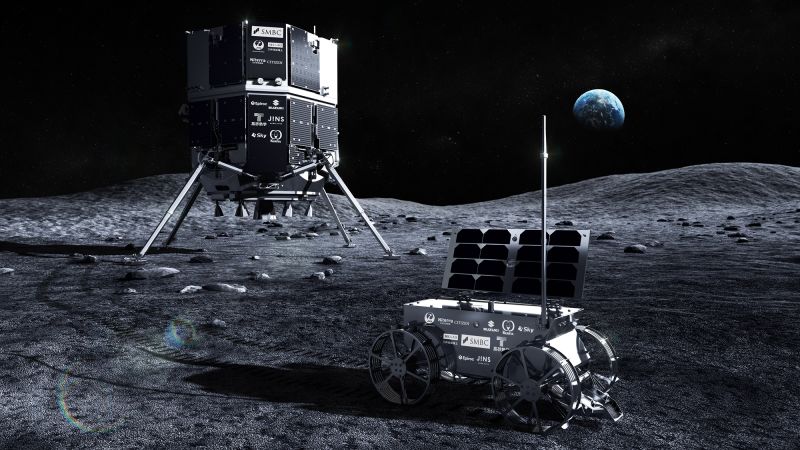
Nearly five months ago, a SpaceX rocket propelled two lunar landers into space. While the Blue Ghost spacecraft from Firefly Aerospace quickly made its way to the moon, achieving a historic landing in March, the other spacecraft, Resilience, developed by Japan-based Ispace, took a considerably longer route. This raises the question: why the extended travel time?
The "Low-Energy Transfer" Approach
Ispace's Resilience lander is employing what's known as a "low-energy transfer" trajectory. Think of it like cycling to a friend's house and taking advantage of downhill slopes to conserve energy. Here's what this approach entails:
- A Gradual Cruise: Resilience travels hundreds of thousands of miles, venturing into deep space.
- Gravity Assist: It relies on the moon's gravity to naturally pull the spacecraft into lunar orbit.
- Fuel Efficiency: This method conserves fuel and resources, making it a potentially cost-effective option.
In contrast, missions like Firefly Aerospace’s Blue Ghost and Intuitive Machines’ Nova-C landers utilize powerful engines for a more direct and rapid transit to the moon. Intuitive Machines' latest Nova-C lander, for example, reached the moon in approximately one week.
The Advantages of a Slow and Steady Pace
According to Ispace executives, the protracted journey provides several key benefits:
- Learning Opportunities: The extended duration allows for continuous monitoring and assessment of the spacecraft's systems. "This journey to the moon is really a learning phase," said Ispace Chief Financial Officer Jumpei Nozaki.
- System Verification: Operators can thoroughly test sensors, navigation systems, and software over an extended period.
- Team Training: Ispace's mission control teams gain valuable experience in managing the complexities of deep-space travel.
Takeshi Hakamada, Ispace's founder and CEO, emphasized that this approach provides a rare opportunity to practice and refine deep-space operational skills.
The Trade-offs
However, the slow and steady approach isn't without its drawbacks:
- Increased Wear and Tear: Instruments are exposed to the harsh radiation environment and extreme temperature fluctuations of space for a longer duration.
- Customer Impact: The extended transit time can be a disadvantage for customers who require quicker delivery of their payloads.
Ispace acknowledges these challenges and plans to adopt a more direct route for its future missions. Nozaki stated that Ispace will abandon the low-energy transfer approach with its third mission. The upcoming lunar lander, Apex 1.0, a partnership with Draper under the Artemis program, will aim for a faster transit.
Resilience's Mission and Future Plans
Despite the longer journey, Ispace is optimistic about the scientific contributions of the three instruments aboard Resilience:
- Algae-Based Food Production Module: Testing the feasibility of producing food using algae in space.
- Deep-Space Radiation Monitor: Measuring radiation levels in the lunar environment.
- Water Electrolyzer Experiment: Exploring the potential to generate hydrogen and oxygen from lunar resources.
Ispace's first attempt to land on the moon ended in a crash in April 2023. This time, they are targeting a different landing site: Mare Frigoris, a flat plain in the moon's northern reaches, offering a more navigable terrain.
A Pivotal Moment for Commercial Lunar Landings
The outcome of Resilience's landing attempt is significant. If successful, Ispace will become the first commercial company outside the US to achieve a soft lunar landing. This milestone would place them alongside Firefly Aerospace as the only companies to complete a fully successful touchdown of a robotic lunar lander. It is important to acknowledge that Intuitive Machines also landed two vehicles on the moon, albeit on their sides, limiting their operational capabilities.
Both Firefly Aerospace and Intuitive Machines are participants in NASA's Commercial Lunar Payload Services (CLPS) initiative, a crucial component of the Artemis program. These robotic missions are paving the way for the return of humans to the moon, gathering essential data and testing technologies.
The journey of Ispace's Resilience lander highlights the diverse strategies employed in space exploration. While a slower, more deliberate approach offers opportunities for learning and system verification, it also presents challenges related to time and instrument durability. As we continue to push the boundaries of lunar exploration, these lessons will be invaluable in shaping future missions and solidifying the role of commercial entities in the space industry. Whether Resilience sticks its landing or not, the data and experience gained are critical steps towards a sustainable future on the moon.
Tags: SpaceX, lunar lander, Blue Ghost, Firefly Aerospace, moon landing, Ispace, Resilience, robotic vehicle, space exploration, lunar surface
Source: https://edition.cnn.com/2025/06/04/science/ispace-moon-landing-attempt-journey
Comments
Post a Comment