- Get link
- X
- Other Apps
Europe Cuts Interest Rates as Trump's Tariffs Loom: A Deep Dive
The European Central Bank (ECB) has made a significant move by cutting its key interest rate, marking the eighth such reduction in just over a year. This decision arrives amidst growing concerns over the potential impact of Donald Trump's tariffs on the Eurozone economy. Let's delve into the details and explore the implications.
Key Interest Rate Reduced
The ECB has lowered the main interest rate from 2.25% to 2%. This adjustment is aimed at stimulating economic activity across the countries that utilize the Euro. However, the backdrop against which this decision was made is complex and fraught with challenges.
Trump's Tariffs Cast a Shadow
While inflation has shown signs of easing within the Eurozone, the economy has been experiencing a period of sluggishness. The implementation of aggressive tariff policies by the US, spearheaded by President Trump, has further exacerbated these concerns. These tariffs have triggered threats of retaliatory measures from the European Union, creating a climate of economic uncertainty.
The ECB has explicitly stated that "uncertainty" surrounding trade "would weigh on business investment and exports" in the short term. This acknowledgment underscores the potential for trade tensions to dampen economic growth prospects.
Economic Growth: A Closer Look
Although the Eurozone experienced a "stronger-than-expected" economic growth of 0.3% between January and March, the ECB anticipates a possible weakening as the year progresses. This cautious outlook reflects the potential headwinds posed by trade disputes and global economic volatility.
Tariff Escalation and Retaliation
- Trump recently doubled tariffs on EU steel and aluminium imports to the US, increasing them from 25% to a substantial 50%.
- While tariffs on other European goods have been paused until July 9th as negotiations continue, a 10% tariff remains in place until a deal is reached.
- In response, the EU has prepared its own list of tariffs on €21 billion worth of US goods, signaling a readiness to defend its economic interests.
Medium-Term Optimism
Despite the current challenges, the ECB remains optimistic about the medium-term economic outlook. This optimism is fueled by the anticipation of increased European spending on defence and infrastructure projects.
Defence Spending and Geopolitical Factors
NATO is actively encouraging its members to allocate more funding to bolster defence capabilities in Europe, particularly in light of the ongoing war in Ukraine. This push for increased defence spending is expected to contribute to economic growth in the region.
Inflation Trends and Household Spending
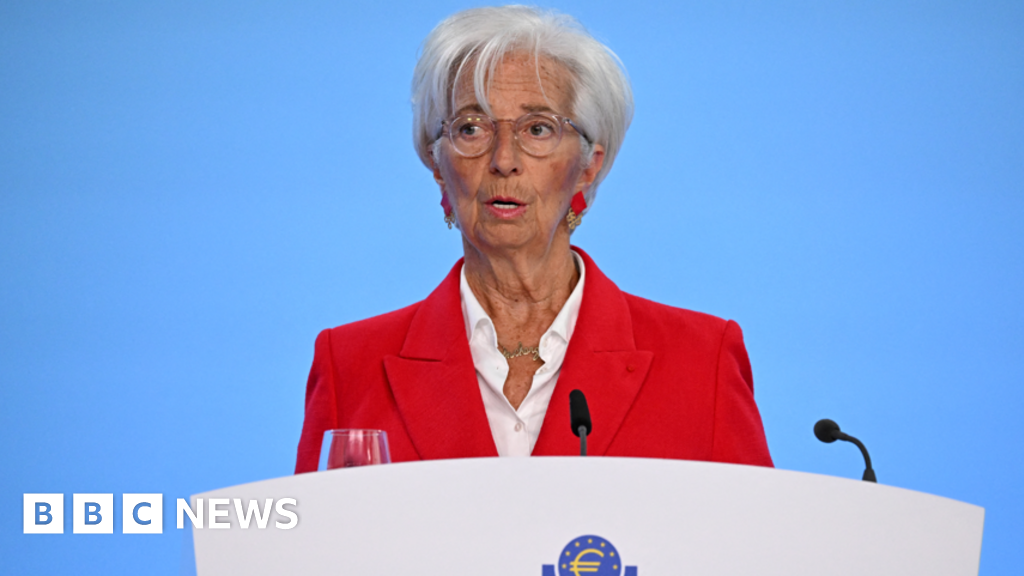
Recent data indicates that inflation across the 20-member Eurozone has fallen below the ECB's 2% target, reaching 1.9% in April. Inflation is projected to remain around the target level between 2025 and 2027. ECB President Christine Lagarde emphasized that higher incomes and a "robust" employment market "will allow households to spend more," thereby enhancing the economy's resilience to global shocks.
Uncertainty Persists
Lagarde acknowledged that significant uncertainty continues to loom over the economy, primarily due to trade policies. This uncertainty underscores the need for vigilance and adaptability in the face of evolving global economic dynamics.
Diplomatic Efforts
Germany's Chancellor Friedrich Merz is scheduled to meet with President Trump at the White House to discuss tariffs and defence spending. These discussions highlight the ongoing efforts to navigate complex trade relationships and foster greater economic cooperation.
Conclusion
The ECB's decision to cut interest rates reflects a proactive approach to mitigating the potential risks posed by trade tensions and economic uncertainty. While challenges remain, the medium-term outlook offers a glimmer of hope, driven by strategic investments and a resilient employment market. The path forward requires careful navigation and a commitment to fostering stability in the face of global economic headwinds.
Tags: Europe interest rates, ECB, Trump tariffs, Eurozone, Inflation, Trade policy, Business investment, Exports, Economic growth, EU
Source: https://www.bbc.com/news/articles/cwyn2w4dr4no
Comments
Post a Comment